Airlines Activated: Essential Pillars in Times of Crisis
In an increasingly unpredictable world, the role of commercial airlines extends far beyond ferrying passengers and cargo from point A to B. From augmenting national defense capabilities to spearheading humanitarian efforts during global health crises, airlines consistently demonstrate an extraordinary capacity to pivot, adapt, and serve. The phrase "airlines activated" encapsulates this dynamic readiness, highlighting their critical function as indispensable infrastructure in moments of profound challenge.
This dual capacity was starkly illustrated by two recent, yet distinct, events: the activation of the Civil Reserve Air Fleet (CRAF) for the Afghanistan evacuation and the remarkable resilience of Ethiopian Airlines amidst the COVID-19 pandemic. Both scenarios underscore a profound truth: when conventional systems falter, airlines often step up, or are called upon, to provide essential lifelines.
Airlines Activated for National Security: The CRAF Mechanism
The U.S. military's enduring need for robust airlift capabilities frequently relies on a unique partnership with the commercial aviation industry. In August 2021, the Pentagon activated Stage I of the Civil Reserve Air Fleet (CRAF) to assist with the complex evacuation efforts from Kabul, Afghanistan. This marked only the third time in the program's history that such a measure was deemed necessary, a testament to the gravity of the situation.
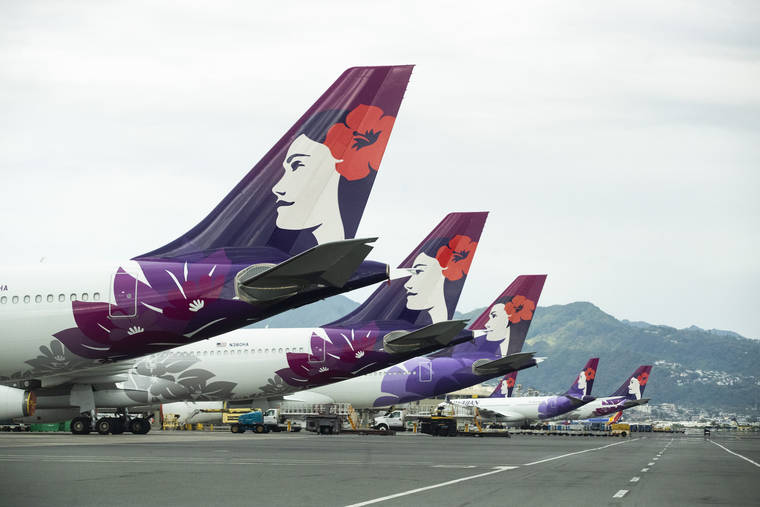
Eight major commercial carriers saw their airlines activated for this critical mission: American Airlines, Atlas Air, Delta Air Lines, Omni Air, Hawaiian Airlines, and United Airlines collectively provided 18 aircraft. Specifically, American, Atlas, Delta, and Omni Air each contributed three aircraft, Hawaiian Airlines two, and United Airlines four. These civil aircraft were not tasked with flying into the volatile Hamid Karzai International Airport in Kabul. Instead, their crucial role was the "onward movement of passengers from temporary safe havens and interim staging bases." This strategic deployment allowed military aircraft to focus on high-risk operations directly in and out of Kabul, significantly enhancing overall operational efficiency and safety.
The CRAF program itself is a national emergency preparedness initiative designed to augment the Defense Department's airlift capability. It's a prime example of a public-private partnership where commercial carriers, while retaining their civil status under FAA regulations, operate under the mission control of U.S. Transportation Command's air component, Air Mobility Command. The prior activations for Operations Desert Shield/Storm (1990-91) and Operation Iraqi Freedom (2002-03) further cement the historical importance and proven effectiveness of this program. This symbiotic relationship underscores that the military's ability to project forces globally is inextricably linked to the robust infrastructure and operational prowess of the commercial airline industry.
Beyond the Battlefield: Airlines Activated for Global Health & Humanitarian Aid
While CRAF showcases the activation of airlines for military objectives, the COVID-19 pandemic revealed another facet of their essential role: humanitarian and economic resilience. During a period when the global aviation industry faced unprecedented turmoil – an estimated $168 billion in collective losses, 44 airlines filing for bankruptcy, and 2.3 million jobs cut – one carrier defied all expectations. Ethiopian Airlines activated its inherent strengths, achieving a record profit, expanding operations, and notably, not laying off a single employee.
This remarkable performance anomaly, particularly for a government-owned flag carrier from a developing nation with an entirely locally managed workforce, demands examination. When global aviation collapsed in Q1 2020, Ethiopian Airlines executed what strategy professors would call "a perfect pivot":
- 48-hour Fleet Conversion: While competitors grounded their passenger fleets, Ethiopian Airlines rapidly reconfigured passenger cabins for critical cargo, transforming their aircraft into flying freight handlers.
- Bridge of Hope: They established the most reliable PPE (Personal Protective Equipment) airbridge from Asia to the world, becoming a crucial conduit for medical supplies when global supply chains were in disarray.
- No Nation Left Behind: Beyond high-value routes, they delivered essential test kits to remote regions others couldn’t reach, demonstrating a commitment that transcended mere profitability.
Their story is a powerful illustration of how airlines activated their resources, not under military directive, but out of strategic necessity and a deep-seated organizational resolve to survive and serve.
The Unseen Strength: Cultural DNA and Crisis Leadership
What accounts for Ethiopian Airlines' exceptionalism when so many others floundered? Traditional management theory often struggles to explain such divergence. The revelation, as highlighted by analyses of their success, points to the activation of something unique to the organization itself: its cultural operating system, inherited resilience capital, and a collective memory of overcoming adversity.
For Ethiopian Airlines, these intangible assets became their greatest strength. They were not merely adopting global best practices; they were leveraging their unique "cultural DNA" – an organizational identity built on adaptability, ingenuity, and a commitment to their national and regional mandate. This allowed them to:
- Innovate under constraint: Quickly re-purpose assets (passenger planes for cargo) when conventional models failed.
- Maintain workforce loyalty: By not resorting to layoffs, they preserved crucial human capital and fostered deep trust.
- Identify unmet needs: Stepping into gaps in global supply chains and reaching underserved communities.
This demonstrates that true sustainable advantage, especially during crisis, emerges not just from external strategies but from tapping into the intrinsic strengths and shared values that define an organization. It's a lesson for any industry: understanding and activating what only your organization possesses can be the ultimate differentiator when the world turns upside down.
Lessons Learned: Resilience in the Face of the Unpredictable
The activations of both the CRAF and Ethiopian Airlines offer profound insights into resilience and the evolving role of commercial aviation:
- Strategic Foresight and Partnerships: The CRAF program exemplifies the long-term value of civilian-military collaboration. Preparing for crises *before* they hit, through established frameworks and relationships, is paramount for national security.
- Agility and Adaptability are Non-Negotiable: Ethiopian Airlines' rapid fleet conversion underscores the need for organizations to foster a culture of agility. The ability to pivot services, re-purpose assets, and identify new markets within days, not months, can be the difference between collapse and unprecedented success.
- Leveraging Intangible Assets: Beyond balance sheets and fleet sizes, cultural resilience, institutional memory, and employee loyalty are powerful assets. Leaders must understand and cultivate their organization's unique "DNA" to unlock hidden strengths during adversity.
- Beyond Pure Profit: Both examples show airlines activated in a capacity that goes beyond immediate financial gain. Service to nation, global humanitarianism, and maintaining vital connections can be strong motivators that also indirectly secure long-term viability and public trust.
- Commercial Aviation as Critical Infrastructure: These events unequivocally highlight airlines as vital components of both national defense and global humanitarian response systems, essential for economic stability and human welfare.
The narratives of commercial airlines activated for military missions and those demonstrating exceptional pandemic resilience converge on a singular truth: the aviation industry is not merely a service provider, but a fundamental pillar of national and global security, capable of rapid transformation and profound impact when crises emerge. Their continued adaptability and strategic importance will undoubtedly shape how nations and global communities respond to future challenges.